Fat Loss vs Weight Loss: What is the Difference?
Most people start their fitness journey with the same goal: “I want to lose weight.” It sounds simple, clear, and motivating. You decide to eat less, start exercising, and check your weight every morning, expecting to see progress. But after a few days or weeks, something confusing happens: the scale doesn’t move the way you expect, or sometimes it even goes up. This is usually the point where frustration begins.
The truth is, the human body doesn’t work in a straight line when it comes to weight. Your daily weight can change because of water retention, food intake, stress levels, sleep quality, and even hormonal changes. So relying only on the scale can easily mislead you. Many people think they are not making progress, even when their body is actually improving.

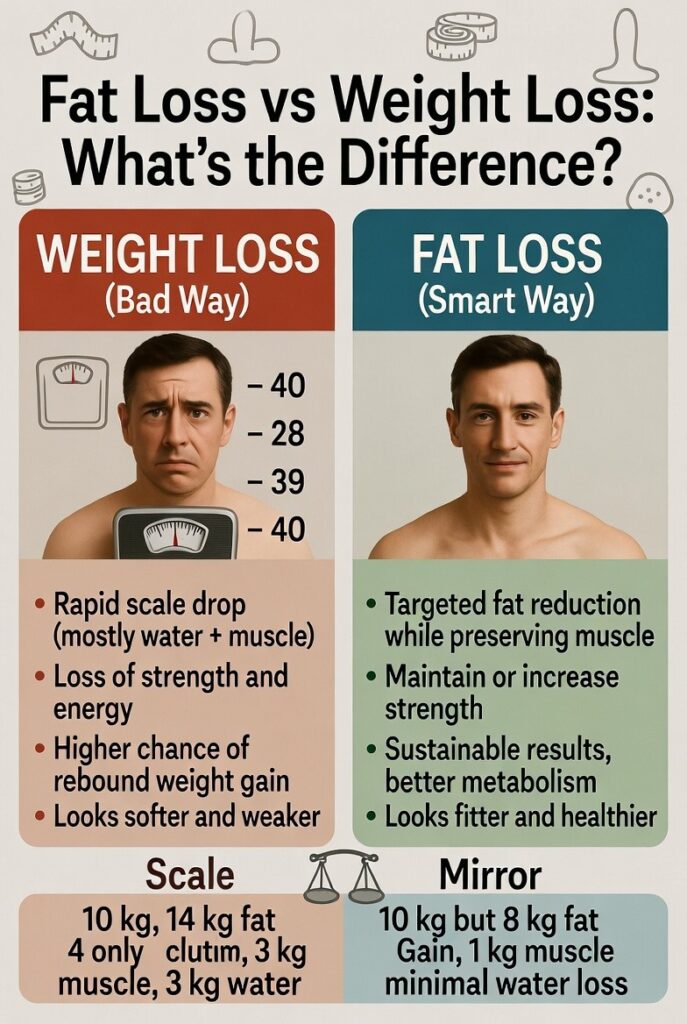
This is where the real confusion starts between fat loss and weight loss. Most beginners don’t realize that these are two completely different things. Weight loss simply means your total body weight is decreasing, but it does not tell you what you are actually losing. It could be fat, muscle, or even water. On the other hand, fat loss specifically means reducing body fat while preserving lean muscle, which is what actually improves your body shape and health.
Understanding this difference is extremely important because it changes the way you approach fitness. If your focus is only on weight loss, you might end up losing muscle, feeling weak, and still not liking how your body looks. But if you focus on fat loss, your body becomes leaner, stronger, and more defined over time.
So before you start any diet or workout plan, it is important to understand what you are really chasing: a lower number on the scale or a healthier, more transformed body.
Understanding fat loss vs weight loss is important if you want real results
What is Weight Loss in Fat Loss vs Weight Loss?
Weight loss refers to a decrease in total body weight.
But the keyword here is
TOTAL
It does not specify what type of weight is lost.
When you lose weight, it may include:
- Body fat
- Muscle mass
- Water weight
- Glycogen (stored carbohydrates)
- Digestive content
Why Weight Changes So Fast Initially
In the first few days of dieting, weight drops quickly.
But this is NOT fat loss.
It is mostly due to:
- Reduced carbohydrate intake
- Loss of stored glycogen
- Water loss (glycogen holds water)
Each gram of glycogen holds around 3–4 grams of water. So when glycogen decreases, water leaves the body quickly.
This is why someone can lose 2–4 kg in a week without actually burning significant fat.
According to nutrition research referenced by Harvard Health Publishing, early weight loss in diets is largely due to water and glycogen reduction rather than fat loss.
Problem With Weight Loss Focus
Weight loss alone can mislead you because the following are true:
- It does not show body composition
- It ignores muscle loss
- It ignores fat percentage
- It fluctuates daily due to hydration
You could lose weight and still:
- Looks the same
- Feel weak
- Have the same body fat level
That is why focusing only on weight is not a smart strategy.
What Is Fat Loss? (Real Transformation Concept)
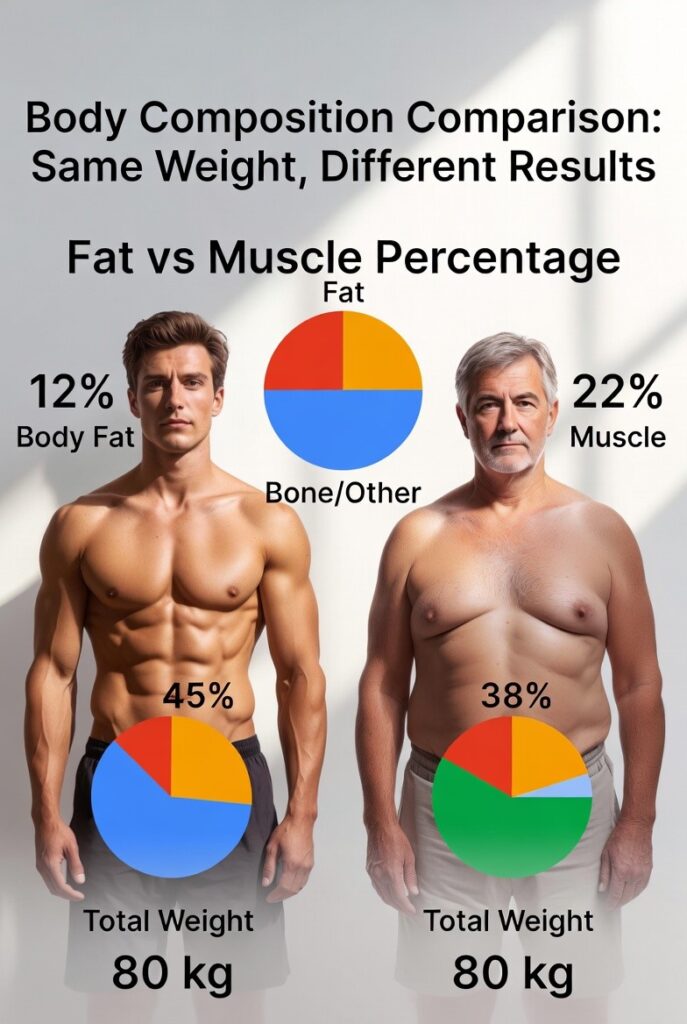
Fat loss refers to the reduction of body fat percentage while maintaining lean muscle mass.
This is what actually transforms your appearance.
Unlike weight loss, fat loss focuses on:
- Burning stored fat cells
- Preserving muscle
- Improving body composition
What Happens During Fat Loss
When your body enters fat loss mode:
- A calorie deficit forces energy usage
- The body starts using stored fat
- Fat cells shrink
- Muscle remains (if diet is correct)
Over time, your body becomes
- Leaner
- More defined
- More athletic
- Healthier metabolically
Why Fat Loss Is More Important Than Weight Loss
Fat loss improves:
- Physical appearance
- Hormonal balance
- Insulin sensitivity
- Heart health
- Long-term metabolism
According to global health research from the World Health Organization, reducing excess body fat significantly lowers risks of chronic diseases like diabetes, hypertension, and cardiovascular issues.
Fat Loss vs Weight Loss: Complete Breakdown
| Factor | Weight Loss | Fat Loss |
|---|---|---|
| Definition | Total body weight reduction | Reduction in body fat |
| Composition | Fat + muscle + water | Mainly fat |
| Appearance | May not change significantly | Noticeable improvement |
| Speed | Fast initially | Gradual and steady |
| Sustainability | Often temporary | Long-term transformation |
| Health Impact | Not guaranteed | Highly beneficial |
Science Behind Fat Loss
Fat loss is controlled by one fundamental principle:
Calorie Deficit
This means:
You burn more calories than you consume.
How Fat Is Actually Burned
When you are in a calorie deficit:
- The body uses stored glycogen first
- Then shifts to fat stores
- Fat cells release fatty acids
- These are used as energy
Over time:
- Fat cells shrink
- Body becomes leaner
But fat loss is not instant. It requires consistency.
Danger of Extreme Dieting
Many people try:
- Very low calories
- Skipping meals
- Crash diets
But this leads to:
- Muscle loss
- Metabolic slowdown
- Fatigue
- Hormonal imbalance
According to the Mayo Clinic, a moderate calorie deficit is the most effective and safe method for sustainable fat loss.
Why People Lose Weight but Not Fat
This is one of the most common problems.
If someone:
- Eats very little
- Does only cardio
- Avoids protein
- Avoids strength training
They will lose weight, but not fat efficiently.
What Actually Happens
- Water weight drops first
- Muscle mass decreases
- Fat loss is minimal
This leads to:
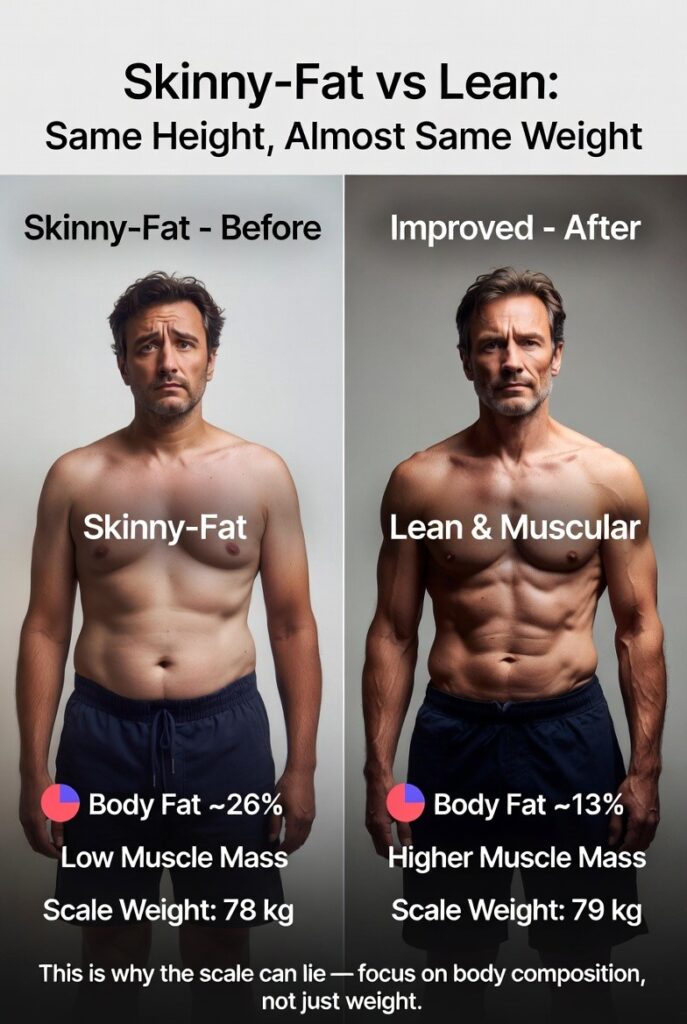
- “Skinny fat” body
- Weak physique
- No real transformation
Signs You Are NOT Losing Fat
- Strength is decreasing
- The body looks soft
- No change in waist size
- Clothes fit the same
- Constant fatigue
Why Scale Is Not Always Reliable
The scale measures total weight — not composition.
You can:
- Lose fat
- Gain muscle
- Retain the same weight
Example:
- Lose 2 kg of fat
- Gain 2 kg of muscle
Scale = same
Body = completely different
This is called body recomposition, the ideal fitness goal.
Best Diet Strategy for Fat Loss vs Weight Loss
Fat loss is NOT about starving.
It is about smart nutrition.
1. Calorie Deficit
- Reduce 300–500 calories daily
- Avoid extreme restriction
2. High Protein Intake
Protein is crucial because it:
- Preserves muscle
- Reduces hunger
- Increases metabolism
- Improves recovery
Research from Healthline confirms that higher protein intake improves fat loss efficiency significantly.
Protein Sources:
- Chicken
- Eggs
- Fish
- Lentils
- Yogurt
3. Balanced Carbs and Fats
Carbs provide energy
Fats support hormones
Healthy sources:
- Rice
- Oats
- Nuts
- Olive oil
- Fruits
Role of Exercise in Fat Loss
Exercise shapes your body.
Strength Training
- Builds muscle
- Boosts metabolism
- Improves body shape
- Prevents muscle loss
Cardio Training
- Burns calories
- Improves heart health
- Supports fat burning
Best Combination
Strength + Cardio = Maximum fat loss efficiency
Lifestyle Factors That Affect Fat Loss
Fat loss is not only about diet and exercise.
1. Sleep
Poor sleep:
- Increases hunger hormones
- Reduces fat burning
- Increases cravings
2. Stress
High stress increases cortisol, which:
- Promotes fat storage
- Especially abdominal fat
3. Hydration
Water helps:
- Metabolism
- Digestion
- Fat transport
According to NIH research, poor sleep and chronic stress significantly reduce fat loss efficiency.
Common Fat Loss Mistakes
- Focusing only on scale
- Eating too little
- Avoiding protein
- No strength training
- Expecting fast results
Step-by-Step Fat Loss Plan
Step 1: Calculate Calories
Know the maintenance level
Step 2: Create Deficit
300–500 kcal
Step 3: Eat Protein
Every meal
Step 4: Strength Training
3–4 times weekly
Step 5: Add Cardio
2–3 sessions weekly
Step 6: Sleep Properly
7–8 hours
Step 7: Track Progress
Photos + measurements
Fat Loss vs Weight Loss in a Real-Life Example
Person A (Weight Loss Focus)
- Eats too little
- Only cardio
- Loses weight quickly
- Looks weak
Person B (Fat Loss Focus)
- Balanced diet
- Strength training
- Slower weight change
- Lean, strong body
Person B wins long-term
FAQ – Fat Loss vs Weight Loss
1. What is the main difference between fat loss and weight loss?
The main difference is that weight loss means reducing total body weight, which can include fat, muscle, and water. On the other hand, fat loss specifically means reducing body fat while preserving muscle mass. Fat loss leads to a leaner, more defined body, while weight loss does not always improve appearance.
2. Why is fat loss better than weight loss?
Fat loss is better because it focuses on improving body composition and health, not just reducing numbers on a scale. When you lose fat, your body becomes more toned, your metabolism improves, and your risk of diseases like diabetes and heart problems decreases.
3. Can I lose fat without losing weight?
Yes, it is possible. If you lose fat but gain muscle at the same time, your total body weight may stay the same. This is called body recomposition, and it is actually one of the healthiest ways to transform your body.
4. Why does my weight fluctuate daily?
Your weight changes daily due to factors like water intake, salt consumption, food digestion, hormones, and sleep quality. These changes are normal and do not reflect actual fat gain or fat loss.
5. How fast can I lose fat safely?
A safe and sustainable fat loss rate is usually around 0.5 to 1 kg per week. Losing fat too quickly can lead to muscle loss, fatigue, and metabolic slowdown.
6. Is cardio enough for fat loss?
Cardio helps burn calories, but it is not enough alone. The best fat loss results come from combining strength training + cardio + proper diet, especially high protein intake.
7. What is the best diet for fat loss?
The best diet for fat loss includes:
- A small calorie deficit
- High protein foods (eggs, chicken, fish, lentils)
- Balanced carbs (rice, oats, fruits)
- Healthy fats (nuts, olive oil)
Consistency is more important than extreme dieting.
Conclusion
At the end of the day, the most important thing to understand is that fat loss and weight loss are not the same thing, even though most people use them as if they are identical. This confusion is exactly what leads to frustration, inconsistency, and giving up too early on fitness journeys.
If your only focus is the number on the scale, then your progress will always feel unstable. Some days the weight goes down, some days it goes up, even when you are doing everything right. This happens because body weight is affected by many factors, like water, food digestion, stress, and sleep, not just fat.
On the other hand, fat loss is what actually changes your body shape and appearance. When you lose fat while keeping your muscle, your body becomes leaner, tighter, and more defined. Your clothes fit better, your confidence increases, and your overall health improves. That is real progress — not just a changing number on a scale.
The key lesson here is simple: don’t rush the process. Fat loss takes time because your body needs to adapt healthily. Quick results usually come from water or muscle loss, not real fat reduction. That is why extreme dieting often fails in the long run.
Instead, focus on consistency. Eat balanced meals, include enough protein, do strength training, and stay active daily. Combine this with proper sleep and stress control, and your body will naturally start losing fat in a sustainable way. In the debate of fat loss vs weight loss, fat loss always matters more
So, instead of chasing fast weight loss, shift your mindset toward long-term fat loss. Because weight loss can fluctuate daily, but fat loss creates a real transformation that stays with you.
This guide is part of our Weight Loss Guide pillar, where we explain complete science-based fat loss strategies in detail.
Read the full system here:
Weight Loss Guide: Science-Based Fat Loss Tips That Work
External Links
1. Harvard Health (Trusted Nutrition Source)
https://www.health.harvard.edu/staying-healthy/stop-counting-calories
2. World Health Organization
https://www.who.int/news-room/fact-sheets/detail/obesity-and-overweight
Pingback: Best Green Tea for Fat Loss: 7 Powerful Types That Actually Work
Pingback: Fat Loss for Women Over 30: 15 Proven Science-Based Ways to Burn Fat Faster