
Introduction: The Frustrating Reality
Why you’re not losing weight is one of the most searched and confusing problems in fitness today.
You are eating “healthy” and exercising daily, but if you’re wondering why you’re not losing weight, you’re not alone.
You step on the scale expecting progress—but nothing changes. This situation feels frustrating, confusing, and demotivating.
Here’s the truth most people ignore:
Weight loss is not just about working hard—it’s about working smart.
Once you understand the real reasons behind fat loss, everything becomes easier and more predictable.
1. The #1 Reason Why You’re Not Losing Weight
Let’s be clear:
If you are losing weight, you are in a calorie deficit.
No matter:
- Keto
- Intermittent fasting
- Clean eating
Nothing works without a calorie deficit.
What is a Calorie Deficit?
A calorie deficit means:
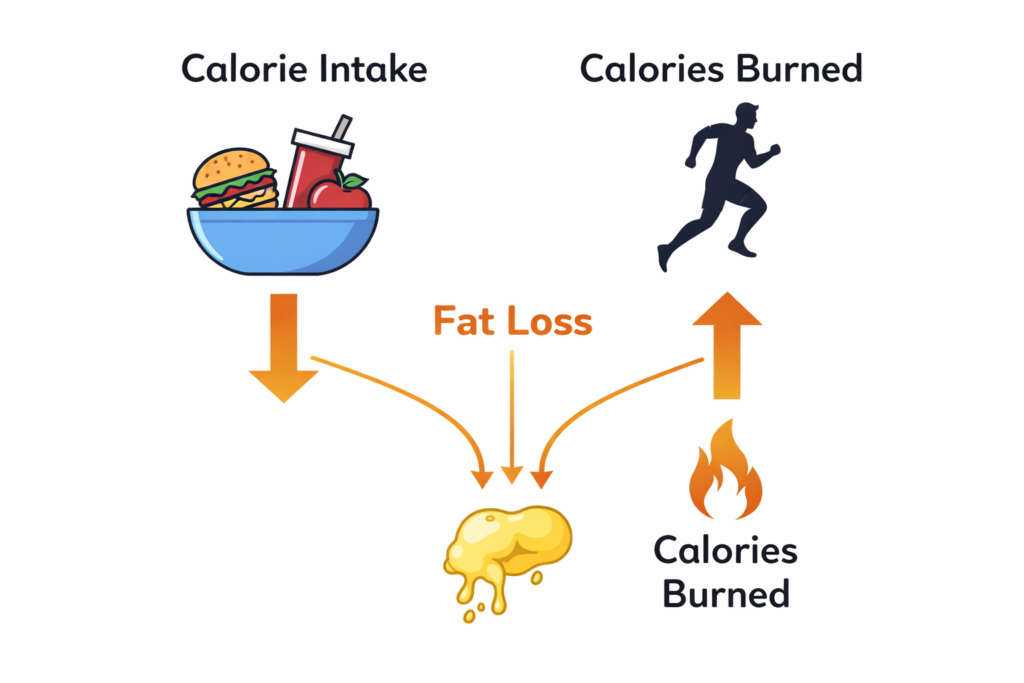
Calories burned > Calories consumed
When this happens consistently, your body starts burning stored fat.

2. Hidden Reasons Why You’re Not Losing Weight
Many people struggle with why they’re not losing weight, even after exercising and dieting
Top Hidden Reasons:
- You’re not tracking calories accurately
- You underestimate portion sizes
- You eat “healthy” but high-calorie foods
- Your metabolism has adapted
- You are inconsistent
Even a 200–300 calorie mistake daily can stop fat loss completely.
3. The Science Behind Fat Loss
To resolve the problem, you must understand how fat loss works scientifically.
Key Components:
1. Metabolism
The number of calories your body burns daily.
2. Thermic Effect of Food (TEF)
Calories burned during digestion.
- Protein burns the most calories
3. Physical Activity
Includes:
- Exercise
- Daily movement (walking, standing)
Total Fat Loss = Metabolism + Activity + TEF
4. What is a fat loss plateau?
A fat loss plateau is when your weight stops dropping despite effort.
Why It Happens:
- The body adapts to calorie intake
- Energy expenditure decreases
- Hormones adjust
How to Break It:
- Reduce calories by 100–200
- Increase daily steps (8k–12k)
- Change workout intensity
5. Diet Mistakes That Stop Weight Loss
Let’s explore the diet mistakes that might explain why you’re not losing weight.
Common Diet Mistakes
- Eating too many nuts and smoothies
- Skipping meals (leads to overeating later)
- Low protein intake
- Drinking calories (tea, juice, soda)
- Not tracking food
How to Fix Your Diet
- Track everything you eat
- Increase protein intake
- Focus on whole foods
- Control portions
Protein should be your priority in every meal.

6. Importance of Protein in Fat Loss
If you’re not losing weight, protein might be missing.
Benefits of a High-Protein Diet:
- Reduces hunger
- Increases metabolism
- Preserves muscle
- Improves fat loss
Best Protein Sources:
- Eggs
- Chicken
- Fish
- Daal (lentils)
- Yogurt
Ideal intake: 1.6–2.2g per kg body weight
7. Exercise Mistakes That Slow Fat Loss
Many people exercise a lot but still wonder why they’re not losing weight.
Common Mistakes
- Only cardio workouts
- No strength training
- Inconsistent routine
- Overtraining
Correct Approach
- Combine strength + cardio
- Train 3–5 times weekly
- Focus on progressive overload
Strength training increases metabolism even at rest.
8. Why Strength Training is a Game-Changer
If you’re not lifting weights, you’re missing real fat loss potential.
Benefits:
- Builds muscle
- Burns more calories
- Improves body shape
- Prevents fat regain
More muscle equals a higher daily calorie burn
9. Lifestyle Factors You Are Ignoring
Sleep, stress, and hormones play a huge role in why you’re not losing weight.
Sleep
- Poor sleep increases hunger hormones
- Leads to cravings
Sleep goal: 7–9 hours
Stress
- High cortisol = fat storage
- Especially belly fat
Reduce stress with:
- Walking
- Relaxation
- Better routine
Hormonal Issues
- Thyroid imbalance
- Insulin resistance
If nothing works, consult a doctor
10. Hidden Calories That Ruin Everything
You might be eating more than you think.
Common Hidden Calories:
- Cooking oil
- Sauces
- Sugary tea
- Snacks
These can add 300–500 extra calories daily.
11. Beginner Mistakes That Kill Progress
Most beginners quit early due to:
- Unrealistic expectations
- Comparing with others
- Extreme dieting
- Lack of patience
Reality:
Healthy fat loss = 0.5–1 kg per week
12. Real-Life Example
Ali started dieting and lost 3 kg quickly.
Then:
- Weight stopped
- Motivation dropped
- He quit
Problem: He expected fast results forever
13. Step-by-Step Fat Loss Plan
Step 1: Calculate Calories
- Find maintenance calories
- Create a deficit (300–500 kcal)
Step 2: Fix Your Diet
- Protein: eggs, chicken
- Carbs: rice, oats
- Fats: nuts, olive oil
Step 3: Workout Plan
- 3 days of strength training
- 2 days of cardio
Step 4: Track Progress
- Weekly weight
- Body measurements
Step 5: Stay Consistent
Minimum 8–12 weeks
14. Weekly Workout Routine
Plan:
- Monday: Upper Body
- Tuesday: Cardio
- Wednesday: Lower Body
- Thursday: Rest
- Friday: Full Body
- Saturday: Light Cardio
- Sunday: Rest
15. Sample Diet Plan
Example:
Breakfast:
Eggs + whole wheat bread
Lunch:
Chicken + rice + vegetables
Dinner:
Daal + salad
Snacks:
Fruits + nuts
16. Myths vs Facts
| Myth | Fact |
|---|---|
| Skip meals | Slows metabolism |
| Cardio only | Not enough |
| Eat less and lose more | Wrong |
| Fat is bad | Healthy fats needed |
17. Advanced Fat Loss Tips
If you’re still not losing weight:
- Increase daily steps
- Try intermittent fasting
- Improve sleep
- Adjust calories
18. How to Stay Consistent
Consistency is everything.
Tips:
- Build habits
- Track progress
- Avoid a perfectionist mindset.
- Focus long-term
FAQs (People Also Ask)
Why am I not losing weight?
Because you’re not in a calorie deficit.
How to break a plateau?
- Reduce calories
- Increase activity
Healthy weight loss?
0.5–1 kg/week
Diet vs. Exercise?
Diet = 70–80%
Internal Linking Ideas
How to Stop Emotional Eating: Simple Tips to Control Stress Eating
Conclusion: Your Transformation Starts Now
Many people struggle with weight loss and often think that the solution is extreme dieting or spending hours in the gym. But the truth is, weight loss is not about starving yourself or following extreme workouts. In fact, those approaches often backfire, slowing your metabolism and making it harder to sustain progress. If you want to truly succeed in losing weight and keeping it off, the key lies in making smart decisions, staying consistent, and practicing patience.
1. Make Smart Decisions
Smart decisions mean understanding your body and how it responds to food and exercise. This includes:
- Eating in a calorie deficit without feeling deprived
- Choosing high-protein meals to preserve muscle mass and boost fat burning
- Focusing on whole foods instead of highly processed options
- Managing hidden calories in snacks, drinks, and condiments
When you consistently make these smart choices, you give your body the tools it needs to burn fat efficiently. Remember, it’s not about perfection—it’s about progress.
2. Stay Consistent
Consistency is the secret ingredient to successful weight loss. Most people give up too soon because they expect immediate results. But fat loss is a gradual process, and skipping workouts, cheating frequently, or going on crash diets can undo weeks of effort. Staying consistent means:
- Following your meal plan daily
- Sticking to a regular workout routine
- Tracking your progress with measurements and scale checks
Consistency compounds over time. Even small, daily actions lead to significant changes when maintained for several weeks.
3. Practice Patience
Patience is critical because healthy fat loss is not instant. Safe weight loss ranges from 0.5–1 kg per week, which allows your body to adjust and maintain muscle mass. Impatience often leads to frustration, giving up, or adopting extreme diets that are unsustainable. Remember, the goal is long-term transformation, not a quick fix.
Final Message
Now that you understand why you’re not losing weight, you have a clear roadmap. Focus on smart decisions, consistency, and patience, and you will start seeing results. Begin small, stay disciplined, and trust the process.
Your transformation is not about doing more—it’s about doing what works, staying consistent, and believing in the process. Start today, and in a few weeks, you’ll look back amazed at how far you’ve come.
External Resources & References
For more information on weight loss, metabolism, and healthy lifestyle habits, check these authoritative sources:
Leave a Reply