
Introduction
Walking for weight loss is one of the simplest and most effective ways to burn fat naturally without intense workouts or gym training.
You’ve finally made a decision: you want to lose weight. You feel motivated, ready to change your life, and excited for results. You open YouTube, Google, or Instagram, expecting guidance. But instead, you get overwhelmed.
You see different advice everywhere:
- “Do intense HIIT workouts daily!”
- “Go to the gym 6 days a week!”
- “Run 5km every morning!”
- “Follow strict diets and burn fat fast!”
Now your mind becomes confused. Everything sounds difficult, time-consuming, and, honestly, exhausting.
Then a simple question comes to your mind:
“Can I lose weight just by walking every day?”
It sounds too easy to be true, right? Most people assume that walking is “too slow” or “not effective enough” for fat loss. But science tells a completely different story.
Walking is one of the most underrated yet powerful tools for weight loss. It doesn’t require a gym membership, expensive equipment, or extreme fitness levels. It is low-impact, beginner-friendly, and most importantly, sustainable for long-term fat loss success.
According to research from reputable health sources like Harvard Health, Mayo Clinic, and NIH, regular walking can significantly improve metabolism, support calorie burning, and contribute to steady fat loss when combined with proper nutrition.

The real secret is not intensity—it is consistency.
In this complete guide, you will learn:
- How walking actually burns fat
- How many calories can you lose
- The science behind weight loss
- A beginner-friendly walking plan
- Diet strategies to boost results
- Common mistakes to avoid
- And realistic timelines for transformation
So if you are tired of confusion and want a simple, proven, and realistic weight loss method, this guide will show you exactly how walking can transform your body step-by-step.
Walking for Weight Loss: The Real Problem Behind Weight Loss Confusion
Most people fail in weight loss not because they lack effort but because they are overwhelmed by misinformation. Social media promotes extreme workouts, fast transformations, and unrealistic expectations, which makes beginners feel lost.
Many believe that:
- Only high-intensity workouts burn fat
- Walking is useless for weight loss
- Sweating equals fat loss
But the truth is very different. Fat loss depends on consistency, not punishment. Walking is often ignored because it looks simple, but simplicity is exactly what makes it powerful. Unlike intense workouts, walking can be done daily without burnout, making it easier to maintain long-term habits that actually lead to sustainable weight loss.
How Walking for Weight Loss Actually Works
Weight loss is based on one key principle: calorie deficit.
This means you must burn more calories than you consume daily. According to research from Harvard Health Publishing, losing approximately 1 pound of fat requires a calorie deficit of around 3500 calories.
Your body burns calories in three main ways:
- Basal metabolism (energy used for survival)
- Daily movement (walking, standing, activities)
- Exercise (planned physical activity)
Walking increases your daily calorie expenditure without stressing your body. Even small increases in movement can significantly impact long-term fat loss. That’s why walking is often recommended by health experts for beginners.
🔗 Source: https://www.health.harvard.edu/
Walking for Weight Loss: How It Burns Fat
Walking helps your body burn fat in a steady and controlled way. Unlike intense workouts that rely heavily on glycogen, walking encourages fat utilization over time, especially when performed at a moderate pace.
Walking also:
- Improves metabolism gradually
- Reduces stress hormones (cortisol), which are linked to fat storage
- Enhances digestion and blood circulation
- Helps build long-term consistency
According to Mayo Clinic, regular walking improves cardiovascular health and helps maintain a healthy weight when combined with proper diet habits.
🔗 Source: https://www.mayoclinic.org/
Walking for Weight Loss: How Many Calories Does Walking Burn?
The number of calories burned during walking depends on your weight, speed, and duration.
A 30-minute brisk walk can burn anywhere between 120 and 200 calories, depending on body weight. While this level of effort may not seem like much, consistency is the key factor.
If you walk daily:
- 200 calories/day = 1400 calories/week
- 6000 calories/month (approx.)

This alone can lead to visible fat loss over time when combined with diet control.
According to Healthline, brisk walking is one of the most effective low-impact fat-burning exercises for beginners.
🔗 Source: https://www.healthline.com/
Walking vs Running: Which Is Better?
Walking and running both have benefits, but they serve different purposes.
Running burns more calories in less time, but it also puts stress on joints and increases injury risk. Walking, on the other hand, is sustainable, safe, and easier to maintain daily.
For beginners, walking often produces better long-term results because the following are true:
- It is easier to stay consistent
- It does not cause burnout
- It reduces injury risk
- It builds a habit-based lifestyle
Weight loss is not about speed; it is about sustainability.
Walking for Weight Loss Routine for Beginners
A structured walking routine is essential for results. Beginners should not start too aggressively.
Start slow:
- Week 1–2: 20–30 minutes daily
- Week 3–4: 30–45 minutes
- Week 5+: 45–60 minutes with intervals
Adding intervals like fast walking and normal pace increases calorie burn and improves endurance. Aim for gradual improvement instead of extreme effort.
Walking for Weight Loss: Combining Walking with Diet
Walking alone can help, but diet determines results.
If you burn 200 calories walking but consume 300 extra calories from junk food, you will not lose weight.
Focus on:
- High-protein foods
- Reduced sugar intake
- Whole foods and fiber
- Calorie deficit consistency

According to the NIH (National Institutes of Health), combining physical activity with dietary control is the most effective long-term fat loss strategy.
🔗 Source: https://www.nih.gov/
Walking for Weight Loss: Common Mistakes Beginners Make
Most beginners fail because of simple mistakes:
- Walking too slowly to burn meaningful calories
- Not tracking steps or progress
- Eating more after walking (compensation eating)
- Being inconsistent
The solution is simple: maintain a brisk pace, track steps using apps, and stay consistent regardless of motivation.
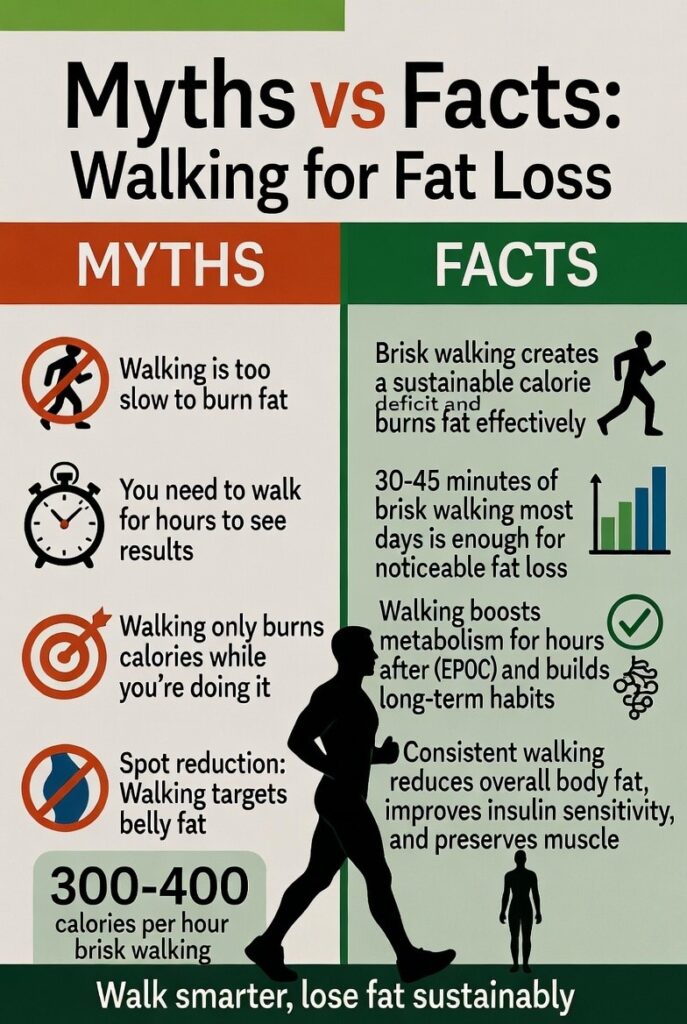
Walking for Weight Loss: Myths vs. Facts
There are many myths about walking:
- Myth: Walking is useless
- Fact: Walking burns consistent calories over time
- Myth: You must sweat heavily
- Fact: Fat loss depends on calorie deficit
- Myth: Only gym workouts work
- Fact: Walking is highly effective for beginners
Even the WHO confirms that moderate physical activity improves overall health significantly.
🔗 Source: https://www.who.int/
Walking for Weight Loss: Weekly Walking Plan
A weekly structured plan helps build consistency:
- Monday: 30 min walk
- Tuesday: 35 min brisk walk
- Wednesday: Light walk or rest
- Thursday: 40 min with intervals
- Friday: 30 min walk
- Saturday: 45 min walk
- Sunday: Relaxed walk
This balance prevents burnout and supports long-term adherence.
Walking for Weight Loss: Real Results
Results depend on consistency and diet.
Typical timeline:
- Week 1–2: Better energy
- Week 3–4: Early fat loss
- Week 6–8: Visible transformation
Average fat loss: 0.5–1 kg per week with proper diet + walking.
Walking is not a quick fix; it is a long-term lifestyle change.
FAQs
Can walking help you lose weight?
Yes, walking helps you lose weight by creating a calorie deficit.
How many steps should I walk daily for weight loss?
Aim for 7,000–12,000 steps per day for effective fat loss.
How long should I walk daily to lose weight?
30–60 minutes of daily walking is ideal for weight loss.
Is walking better than running for beginners?
Yes, walking is safer and more sustainable than running for beginners.
When will I see results from walking?
Most people see visible results within 3–8 weeks.
Does walking burn belly fat?
Walking reduces overall body fat, including belly fat, over time.
Do I need fast walking to lose weight?
Yes, brisk walking burns more calories than slow walking.
Walking for Weight Loss: Conclusion
So, does walking really help you lose weight?
The answer is a strong yes, but with an important condition: consistency and lifestyle balance matter more than intensity.
Walking is often underestimated because it looks simple. People believe that only intense workouts or gym sessions can lead to fat loss. However, science consistently shows that sustainable weight loss is built on daily habits, not extreme effort.
Walking helps you burn calories steadily without putting stress on your body. It improves metabolism, reduces stress hormones, supports heart health, and most importantly, builds a routine that you can actually maintain for months and years.
Unlike crash diets or extreme fitness programs, walking does not require motivation every day. It becomes part of your lifestyle. And that is the real secret behind long-term fat loss success.
However, walking alone is not magic. If you combine it with proper nutrition like eating in a slight calorie deficit, increasing protein intake, and reducing processed foods, the results multiply significantly. This combination is what leads to real transformation.
The biggest advantage of walking is sustainability. You can do it anywhere, anytime, without equipment or financial cost. It is suitable for beginners, overweight individuals, busy professionals, and even people recovering from inactivity.
If you stay consistent for just 30–60 minutes daily, you will notice changes not only in your body but also in your energy levels, mood, and confidence.
In short:
Walking is simple
Walking is free
Walking is powerful
But only if you stay consistent
You don’t need extreme workouts or complicated routines to start your fitness journey. You just need one step and then another.
So instead of waiting for the “perfect plan,” start walking today. Because every step you take is one step closer to a healthier, lighter, and more confident version of yourself.
Internal Resources
Best Fruits for Weight Loss: 10 Top Choices to Burn Fat & Stay Healthy
Leave a Reply